Call
the Map
FORECAST29 DAYS OUT

The WireOhio

The Ohio Split

In 2018, seven Ohio counties voted for Sherrod Brown and for the ticket of Mike DeWine and Jon Husted. This year Brown and Husted are running against each other, with a second close race directly below them. We went through every state that has filled both offices on one day since 1990, and all 88 Ohio counties.

Ohio, 2018
Each mark is a state voting for senator and governor on the same day, 1990–2024: 277 of the 293 such elections. Marks in neither party’s color split the two offices.

In December 2017, after Mike DeWine and Jon Husted stopped running against each other for governor of Ohio and merged into one ticket, a statehouse reporter asked Sherrod Brown what he made of it.

Brown, the state’s Democratic senator, was up for re-election himself the next fall. He told Andy Chow of the Statehouse News Bureau that he suspected a deal, with DeWine at the top of the ticket on the condition that he serve one term. “Ohio has elections for a reason,” Brown said. Husted, asked about it, said there had been “no talk about that.”

Eleven months later Ohio held the election, and it gave all three men what they wanted. Brown won a third term by about seven points. A few lines below his name, the line that read “Mike DeWine and Jon Husted” won by about four.

It had been 44 years since Ohio last sent a senator of one party and a governor of the other into office on the same day, by the count of Eric Ostermeier of the University of Minnesota. That was 1974, when Jim Rhodes took the governorship back from John Gilligan by fewer than 11,500 votes while John Glenn won his Senate seat by 34 points.

Nobody counts how many people voted for both Brown and DeWine in 2018, because the vote is secret. The returns do set a floor. DeWine received 178,266 more votes than Jim Renacci, the Republican running against Brown. Suppose every Ohioan who skipped the Senate race, or voted against Brown, voted for DeWine. More than 91,000 ballots still have to carry both names, and the true figure is certainly higher. Seven counties gave pluralities to both: Ashtabula, Erie, Lake, Montgomery, Ottawa, Portage and Wood.

Husted is a senator now. DeWine appointed him in January 2025 to the seat JD Vance left for the vice presidency, and Husted has to win it on Nov. 3. The Democrat running against him is Brown, who lost his own seat two years ago to Bernie Moreno. Directly under their race is the one for governor, between Vivek Ramaswamy, a Republican, and Amy Acton, a Democrat. As this page was built, Call the Map’s forecast gave Brown 60 chances in 100 and Acton 54.

We went back through every November since 1990 in which a state filled a Senate seat and a governorship on the same day. There are 293 of them. Then we took Ohio’s own returns apart, county by county.

IThirteen states out of twenty-four

That is how many split in 1990. Illinois kept a Democratic senator, Paul Simon, by 30 points and elected a Republican governor, Jim Edgar, the same day. Minnesota sent Paul Wellstone to the Senate and put Arne Carlson, a Republican, in the governor’s office.

From 1990 through 2006, 72 of 149 such elections ended with one office in each party’s hands. The two results in a state had almost nothing to do with each other. The typical gap between the Senate margin and the governor’s margin was 20 points.

In 2008, five states voted for both offices and none split. Since then the count is 28 of 141, and the typical gap has shrunk to 10 points. In 2024 the only state of nine to do it was Vermont, which re-elected Bernie Sanders and Phil Scott, a Republican, together.

States used to split these two offices about half the time. Since 2008 it is one pair in five.

Each column is one November election: the share of states voting for a senator and a governor that day which gave the offices to different parties, and the typical distance between the two margins.

Same-day Senate and governor pairs by election
ElectionPairsSplitMedian gap, points
1990241322.3
19928418.9
199423817.8
19965420.7
1998261225.0
20009320.6
2002241118.3
20048528.0
2006221221.1
20085012.9
201028413.7
2012928.7
201426515.3
2016934.3
201823510.4
2020526.3
20222768.0
2024917.2

1990–2006: 72 of 149 pairs split (48%); median gap 20 points. 2008–2024: 28 of 141 (20%); median gap 10 points. Presidential years have few pairs, because most states elect governors at the midterm.

Source: Call the Map analysis of 293 pairs. Senate returns from the MIT Election Data and Science Lab; governor returns from state returns as compiled by FiveThirtyEight (1996–2024) and Algara and Amlani (1990–1994). The gap counts only pairs where both contests were a Democrat against a Republican. Download the data

Scott has now done this four times. Chris Sununu did it three times in New Hampshire, Charlie Baker twice in Massachusetts, Larry Hogan once in Maryland. Those four Republican governors account for half of the 20 recent cases in which a state chose a Democratic senator and a Republican governor at once. Only eight states went the other way, among them Kansas in 2022, when Laura Kelly held the governorship while Jerry Moran won his Senate race by 23 points.

Baker’s 2018 is the dot near the bottom right corner of the chart below: Elizabeth Warren up 24 points, Baker up 34.

One dot per state, per election day. The shaded corners are splits.

Across: the Senate margin. Up: the governor’s margin, same state, same day. A state that voted identically for both would sit on the dotted line. Tap or point near a dot to read it; choose a state to follow it through the years.

R+40R+40R+20R+20D+20D+20D+40D+40Republican senator,Democratic governorDemocratic senator,Republican governorSenate margin →↑ Governor marginHawaii 1990 (special Senate election). Senate: Daniel K. Akaka, D+9.4. Governor: John Waihee, D+21. Same party.Maine 1990. Senate: William S. Cohen, R+23. Governor: John R. McKernan, R+2.6. Same party.Nebraska 1990. Senate: J. James Exon, D+18. Governor: Ben Nelson, D+0.7. Same party.New Hampshire 1990. Senate: Robert C. Smith, R+34. Governor: Judd Gregg, R+26. Same party.Oklahoma 1990. Senate: David L. Boren, D+66. Governor: David Walters, D+25. Same party.Rhode Island 1990. Senate: Claiborne Pell, D+24. Governor: Bruce G. Sundlun, D+48. Same party.South Carolina 1990. Senate: Strom Thurmond, R+32. Governor: Carroll Campbell, R+42. Same party.South Dakota 1990. Senate: Larry Pressler, R+7.3. Governor: George S. Mickelson, R+18. Same party.Tennessee 1990. Senate: Al Gore, D+38. Governor: Ned McWherter, D+24. Same party.New Hampshire 1992. Senate: Judd Gregg, R+2.8. Governor: Steve Merrill, R+16. Same party.Utah 1992. Senate: Robert F. Bennett, R+16. Governor: Mike O. Leavitt, R+19. Same party.Vermont 1992. Senate: Patrick J. Leahy, D+11. Governor: Howard B. Dean, D+52. Same party.Washington 1992. Senate: Patty Murray, D+8.0. Governor: Mike Lowry, D+4.3. Same party.Arizona 1994. Senate: Jon Kyl, R+14. Governor: Fife Symington, R+8.2. Same party.Hawaii 1994. Senate: Daniel K. Akaka, D+48. Governor: Benjamin J. Cayetano, D+7.3. Same party.Maryland 1994. Senate: Paul S. Sarbanes, D+18. Governor: Parris N. Glendening, D+0.4. Same party.Michigan 1994. Senate: Spencer Abraham, R+9.1. Governor: John Engler, R+23. Same party.Minnesota 1994. Senate: Rod Grams, R+5.0. Governor: Arne Carlson, R+29. Same party.Nebraska 1994. Senate: Bob Kerrey, D+9.8. Governor: Ben Nelson, D+47. Same party.Nevada 1994. Senate: Richard H. Bryan, D+9.9. Governor: Robert J. Miller, D+11. Same party.Oklahoma 1994 (special Senate election). Senate: James M. Inhofe, R+15. Governor: Frank Keating, R+17. Same party.Pennsylvania 1994. Senate: Rick Santorum, R+2.5. Governor: Thomas J. Ridge, R+5.4. Same party.Rhode Island 1994. Senate: John H. Chafee, R+29. Governor: Lincoln C. Almond, R+3.8. Same party.Tennessee 1994. Senate: Bill Frist, R+14. Governor: Don Sundquist, R+9.6. Same party.Tennessee 1994 (special Senate election). Senate: Fred Thompson, R+22. Governor: Don Sundquist, R+9.6. Same party.Texas 1994. Senate: Kay Bailey Hutchison, R+23. Governor: George W. Bush, R+7.6. Same party.Wyoming 1994. Senate: Craig Thomas, R+20. Governor: Jim Geringer, R+19. Same party.Delaware 1996. Senate: Joseph R. Biden Jr., D+22. Governor: Thomas R. Carper, D+39. Same party.Arizona 1998. Senate: John McCain, R+42. Governor: Jane Hull, R+25. Same party.California 1998. Senate: Barbara Boxer, D+10. Governor: Gray Davis, D+20. Same party.Colorado 1998. Senate: Ben Nighthorse Campbell, R+27. Governor: William F. Owens, R+0.6. Same party.Hawaii 1998. Senate: Daniel K. Inouye, D+61. Governor: Benjamin Cayetano, D+1.3. Same party.Idaho 1998. Senate: Mike Crapo, R+41. Governor: Dirk Kempthorne, R+39. Same party.Illinois 1998. Senate: Peter G. Fitzgerald, R+2.9. Governor: George Ryan, R+3.6. Same party.Kansas 1998. Senate: Sam Brownback, R+34. Governor: William Graves, R+51. Same party.Maryland 1998. Senate: Barbara A. Mikulski, D+41. Governor: Parris Glendening, D+10. Same party.Oklahoma 1998. Senate: Don Nickles, R+35. Governor: Frank Keating, R+17. Same party.Oregon 1998. Senate: Ron Wyden, D+27. Governor: John Kitzhaber, D+34. Same party.Pennsylvania 1998. Senate: Arlen Specter, R+27. Governor: Thomas Ridge, R+26. Same party.South Carolina 1998. Senate: Ernest F. Hollings, D+7.0. Governor: James H. Hodges, D+8.0. Same party.Vermont 1998. Senate: Patrick J. Leahy, D+50. Governor: Howard Dean, D+15. Same party.Delaware 2000. Senate: Thomas R. Carper, D+12. Governor: Ruth Minner, D+20. Same party.Missouri 2000. Senate: Mel Carnahan, D+2.1. Governor: Bob Holden, D+0.9. Same party.Montana 2000. Senate: Conrad Burns, R+3.3. Governor: Judy Martz, R+3.9. Same party.Utah 2000. Senate: Orrin G. Hatch, R+34. Governor: Michael Leavitt, R+14. Same party.Washington 2000. Senate: Maria Cantwell, D+0.1. Governor: Gary Locke, D+19. Same party.West Virginia 2000. Senate: Robert C. Byrd, D+58. Governor: Bob Wise, D+2.9. Same party.Alaska 2002. Senate: Ted Stevens, R+68. Governor: Frank Murkowski, R+15. Same party.Alabama 2002. Senate: Jeff Sessions, R+19. Governor: Bob Riley, R+0.2. Same party.Colorado 2002. Senate: Wayne Allard, R+4.9. Governor: William F. Owens, R+29. Same party.Georgia 2002. Senate: Saxby Chambliss, R+6.8. Governor: Sonny Perdue, R+5.2. Same party.Iowa 2002. Senate: Tom Harkin, D+10. Governor: Tom Vilsack, D+8.2. Same party.Idaho 2002. Senate: Larry E. Craig, R+33. Governor: Dirk Kempthorne, R+15. Same party.Illinois 2002. Senate: Richard J. Durbin, D+22. Governor: Rod Blagojevich, D+7.1. Same party.Michigan 2002. Senate: Carl Levin, D+23. Governor: Jennifer Granholm, D+4.0. Same party.Minnesota 2002. Senate: Norm Coleman, R+2.2. Governor: Tim Pawlenty, R+7.9. Same party.Nebraska 2002. Senate: Chuck Hagel, R+68. Governor: Mike Johanns, R+41. Same party.New Hampshire 2002. Senate: John E. Sununu, R+4.4. Governor: Craig Benson, R+20. Same party.South Carolina 2002. Senate: Lindsey O. Graham, R+10. Governor: Mark Sanford, R+5.8. Same party.Texas 2002. Senate: John Cornyn, R+12. Governor: Rick Perry, R+18. Same party.Missouri 2004. Senate: Christopher S. Bond, R+13. Governor: Matt Blunt, R+3.0. Same party.Utah 2004. Senate: Robert F. Bennett, R+40. Governor: Jon Huntsman Jr., R+16. Same party.Washington 2004. Senate: Patty Murray, D+12. Governor: Christine Gregoire, Even. Same party.Massachusetts 2006. Senate: Edward M. Kennedy, D+39. Governor: Deval Patrick, D+20. Same party.Maryland 2006. Senate: Benjamin L. Cardin, D+10. Governor: Martin O'Malley, D+6.5. Same party.Michigan 2006. Senate: Debbie Stabenow, D+16. Governor: Jennifer Granholm, D+14. Same party.New Mexico 2006. Senate: Jeff Bingaman, D+41. Governor: Bill Richardson, D+38. Same party.Nevada 2006. Senate: John Ensign, R+14. Governor: Jim Gibbons, R+4.2. Same party.New York 2006. Senate: Hillary Rodham Clinton, D+36. Governor: Eliot Spitzer, D+41. Same party.Pennsylvania 2006. Senate: Bob Casey Jr., D+17. Governor: Ed Rendell, D+21. Same party.Texas 2006. Senate: Kay Bailey Hutchison, R+26. Governor: Rick Perry, R+9.2. Same party.Wisconsin 2006. Senate: Herb Kohl, D+38. Governor: Jim Doyle, D+7.4. Same party.Delaware 2008. Senate: Joseph R. Biden Jr., D+29. Governor: Jack Markell, D+35. Same party.Montana 2008. Senate: Max Baucus, D+46. Governor: Brian Schweitzer, D+33. Same party.North Carolina 2008. Senate: Kay Hagan, D+8.5. Governor: Bev Perdue, D+3.4. Same party.New Hampshire 2008. Senate: Jeanne Shaheen, D+6.3. Governor: John Lynch, D+43. Same party.West Virginia 2008. Senate: John D. Rockefeller IV, D+27. Governor: Joe Manchin III, D+44. Same party.Alabama 2010. Senate: Richard C. Shelby, R+30. Governor: Robert Bentley, R+16. Same party.Arizona 2010. Senate: John McCain, R+24. Governor: Jan Brewer, R+12. Same party.California 2010. Senate: Barbara Boxer, D+10. Governor: Jerry Brown, D+13. Same party.Connecticut 2010. Senate: Richard Blumenthal, D+12. Governor: Dannel P. Malloy, D+0.6. Same party.Georgia 2010. Senate: Johnny Isakson, R+19. Governor: Nathan Deal, R+10. Same party.Hawaii 2010. Senate: Daniel K. Inouye, D+53. Governor: Neil Abercrombie, D+17. Same party.Iowa 2010. Senate: Chuck Grassley, R+31. Governor: Terry E. Branstad, R+9.6. Same party.Idaho 2010. Senate: Mike Crapo, R+46. Governor: Butch Otter, R+26. Same party.Kansas 2010. Senate: Jerry Moran, R+44. Governor: Sam Brownback, R+31. Same party.Maryland 2010. Senate: Barbara Mikulski, D+26. Governor: Martin O'Malley, D+14. Same party.New York 2010. Senate: Charles E. Schumer, D+34. Governor: Andrew Cuomo, D+29. Same party.New York 2010 (special Senate election). Senate: Kirsten E. Gillibrand, D+28. Governor: Andrew Cuomo, D+29. Same party.Oklahoma 2010. Senate: Thomas A. Coburn, R+45. Governor: Mary Fallin, R+21. Same party.Oregon 2010. Senate: Ron Wyden, D+18. Governor: John Kitzhaber, D+1.5. Same party.Pennsylvania 2010. Senate: Pat Toomey, R+2.0. Governor: Thomas W. Corbett, R+9.0. Same party.South Carolina 2010. Senate: Jim DeMint, R+34. Governor: Nikki Haley, R+4.5. Same party.Utah 2010. Senate: Mike Lee, R+29. Governor: Gary Herbert, R+32. Same party.Vermont 2010. Senate: Patrick J. Leahy, D+33. Governor: Peter Shumlin, D+1.8. Same party.Wisconsin 2010. Senate: Ron Johnson, R+4.8. Governor: Scott Walker, R+5.8. Same party.Delaware 2012. Senate: Thomas R. Carper, D+37. Governor: Jack Markell, D+41. Same party.Missouri 2012. Senate: Claire McCaskill, D+16. Governor: Jay Nixon, D+12. Same party.Montana 2012. Senate: Jon Tester, D+3.7. Governor: Steve Bullock, D+1.6. Same party.Utah 2012. Senate: Orrin G. Hatch, R+35. Governor: Gary Herbert, R+41. Same party.Vermont 2012. Senate: Bernie Sanders, D+46. Governor: Peter Shumlin, D+20. Same party.Washington 2012. Senate: Maria Cantwell, D+21. Governor: Jay Inslee, D+3.1. Same party.West Virginia 2012. Senate: Joe Manchin III, D+24. Governor: Earl Ray Tomblin, D+4.8. Same party.Arkansas 2014. Senate: Tom Cotton, R+17. Governor: Asa Hutchinson, R+14. Same party.Georgia 2014. Senate: David A. Perdue, R+7.7. Governor: Nathan Deal, R+7.9. Same party.Hawaii 2014 (special Senate election). Senate: Brian Schatz, D+42. Governor: David Y. Ige, D+12. Same party.Iowa 2014. Senate: Joni Ernst, R+8.3. Governor: Terry E. Branstad, R+22. Same party.Idaho 2014. Senate: James E. Risch, R+31. Governor: Butch Otter, R+15. Same party.Maine 2014. Senate: Susan M. Collins, R+37. Governor: Paul R. LePage, R+4.8. Same party.Minnesota 2014. Senate: Al Franken, D+10. Governor: Mark Dayton, D+5.6. Same party.Nebraska 2014. Senate: Ben Sasse, R+33. Governor: Pete Ricketts, R+18. Same party.New Hampshire 2014. Senate: Jeanne Shaheen, D+3.2. Governor: Maggie Hassan, D+5.0. Same party.Oklahoma 2014. Senate: James M. Inhofe, R+39. Governor: Mary Fallin, R+15. Same party.Oklahoma 2014 (special Senate election). Senate: James Lankford, R+39. Governor: Mary Fallin, R+15. Same party.Oregon 2014. Senate: Jeff Merkley, D+19. Governor: John Kitzhaber, D+5.8. Same party.Rhode Island 2014. Senate: Jack Reed, D+41. Governor: Gina M. Raimondo, D+4.5. Same party.South Carolina 2014. Senate: Lindsey Graham, R+15. Governor: Nikki Haley, R+14. Same party.South Carolina 2014 (special Senate election). Senate: Tim Scott, R+24. Governor: Nikki Haley, R+14. Same party.South Dakota 2014. Senate: Mike Rounds, R+21. Governor: Dennis M. Daugaard, R+45. Same party.Tennessee 2014. Senate: Lamar Alexander, R+30. Governor: Bill Haslam, R+47. Same party.Texas 2014. Senate: John Cornyn, R+27. Governor: Greg Abbott, R+20. Same party.Wyoming 2014. Senate: Michael B. Enzi, R+55. Governor: Matt Mead, R+34. Same party.Indiana 2016. Senate: Todd C. Young, R+9.7. Governor: Eric Holcomb, R+6.0. Same party.Missouri 2016. Senate: Roy Blunt, R+2.8. Governor: Eric Greitens, R+5.6. Same party.North Dakota 2016. Senate: John Hoeven, R+62. Governor: Doug Burgum, R+57. Same party.Oregon 2016. Senate: Ron Wyden, D+23. Governor: Kate Brown, D+7.2. Same party.Utah 2016. Senate: Mike Lee, R+41. Governor: Gary Herbert, R+38. Same party.Washington 2016. Senate: Patty Murray, D+18. Governor: Jay Inslee, D+8.8. Same party.Connecticut 2018. Senate: Chris Murphy, D+20. Governor: Ned Lamont, D+3.1. Same party.Florida 2018. Senate: Rick Scott, R+0.1. Governor: Ron DeSantis, R+0.4. Same party.Hawaii 2018. Senate: Mazie K. Hirono, D+42. Governor: David Y. Ige, D+29. Same party.Maine 2018. Senate: Angus King, D+19. Governor: Janet T. Mills, D+7.7. Same party.Michigan 2018. Senate: Debbie Stabenow, D+6.5. Governor: Gretchen Whitmer, D+9.6. Same party.Minnesota 2018. Senate: Amy Klobuchar, D+24. Governor: Tim Walz, D+11. Same party.Minnesota 2018 (special Senate election). Senate: Tina Smith, D+11. Governor: Tim Walz, D+11. Same party.Nebraska 2018. Senate: Deb Fischer, R+19. Governor: Pete Ricketts, R+18. Same party.New Mexico 2018. Senate: Martin Heinrich, D+24. Governor: Michelle Lujan Grisham, D+14. Same party.Nevada 2018. Senate: Jacky Rosen, D+5.0. Governor: Steve Sisolak, D+4.2. Same party.New York 2018. Senate: Kirsten E. Gillibrand, D+34. Governor: Andrew Cuomo, D+23. Same party.Pennsylvania 2018. Senate: Bob Casey Jr., D+13. Governor: Thomas W. Wolf, D+17. Same party.Rhode Island 2018. Senate: Sheldon Whitehouse, D+23. Governor: Gina M. Raimondo, D+16. Same party.Tennessee 2018. Senate: Marsha Blackburn, R+11. Governor: Bill Lee, R+21. Same party.Texas 2018. Senate: Ted Cruz, R+2.6. Governor: Greg Abbott, R+13. Same party.Wisconsin 2018. Senate: Tammy Baldwin, D+11. Governor: Tony Evers, D+1.1. Same party.Wyoming 2018. Senate: John Barrasso, R+37. Governor: Mark Gordon, R+40. Same party.Delaware 2020. Senate: Christopher A. Coons, D+22. Governor: John C. Carney Jr., D+21. Same party.Montana 2020. Senate: Steve Daines, R+10. Governor: Greg Gianforte, R+13. Same party.West Virginia 2020. Senate: Shelley Moore Capito, R+43. Governor: Jim Justice, R+34. Same party.Alabama 2022. Senate: Katie Britt, R+36. Governor: Kay Ivey, R+38. Same party.Arkansas 2022. Senate: John Boozman, R+35. Governor: Sarah Huckabee Sanders, R+28. Same party.Arizona 2022. Senate: Mark Kelly, D+4.9. Governor: Katie Hobbs, D+0.7. Same party.California 2022. Senate: Alex Padilla, D+22. Governor: Gavin Newsom, D+18. Same party.Colorado 2022. Senate: Michael Bennet, D+15. Governor: Jared Polis, D+19. Same party.Connecticut 2022. Senate: Richard Blumenthal, D+15. Governor: Ned Lamont, D+13. Same party.Florida 2022. Senate: Marco Rubio, R+16. Governor: Ron DeSantis, R+19. Same party.Hawaii 2022. Senate: Brian Schatz, D+45. Governor: Josh Green, D+26. Same party.Iowa 2022. Senate: Chuck Grassley, R+12. Governor: Kim Reynolds, R+19. Same party.Idaho 2022. Senate: Mike Crapo, R+32. Governor: Brad Little, R+40. Same party.Illinois 2022. Senate: Tammy Duckworth, D+15. Governor: J.B. Pritzker, D+13. Same party.Maryland 2022. Senate: Chris Van Hollen, D+32. Governor: Wes Moore, D+32. Same party.New York 2022. Senate: Charles E. Schumer, D+14. Governor: Kathy C. Hochul, D+6.4. Same party.Oklahoma 2022. Senate: James Lankford, R+32. Governor: Kevin Stitt, R+14. Same party.Oklahoma 2022 (special Senate election). Senate: Markwayne Mullin, R+27. Governor: Kevin Stitt, R+14. Same party.Oregon 2022. Senate: Ron Wyden, D+15. Governor: Tina Kotek, D+3.4. Same party.Pennsylvania 2022. Senate: John Fetterman, D+4.9. Governor: Josh Shapiro, D+15. Same party.South Carolina 2022. Senate: Tim Scott, R+26. Governor: Henry McMaster, R+17. Same party.South Dakota 2022. Senate: John Thune, R+43. Governor: Kristi Noem, R+27. Same party.Delaware 2024. Senate: Lisa Blunt Rochester, D+17. Governor: Matt Meyer, D+12. Same party.Indiana 2024. Senate: Jim Banks, R+20. Governor: Mike Braun, R+13. Same party.Missouri 2024. Senate: Josh Hawley, R+14. Governor: Mike Kehoe, R+20. Same party.Montana 2024. Senate: Tim Sheehy, R+7.1. Governor: Greg Gianforte, R+20. Same party.North Dakota 2024. Senate: Kevin Cramer, R+33. Governor: Kelly Armstrong, R+42. Same party.Utah 2024. Senate: John Curtis, R+31. Governor: Spencer J. Cox, R+24. Same party.Washington 2024. Senate: Maria Cantwell, D+18. Governor: Bob Ferguson, D+11. Same party.West Virginia 2024. Senate: Jim Justice, R+41. Governor: Patrick Morrisey, R+30. Same party.Alabama 1990. Senate: Howell Heflin, D+21. Governor: Guy Hunt, R+4.2. Split.Colorado 1990. Senate: Hank Brown, R+14. Governor: Roy Romer, D+26. Split.Iowa 1990. Senate: Tom Harkin, D+9.1. Governor: Terry E. Branstad, R+22. Split.Idaho 1990. Senate: Larry E. Craig, R+23. Governor: Cecil D. Andrus, D+36. Split.Illinois 1990. Senate: Paul Simon, D+30. Governor: Jim Edgar, R+2.6. Split.Kansas 1990. Senate: Nancy Landon Kassebaum, R+47. Governor: Joan Finney, D+6.0. Split.Massachusetts 1990. Senate: John Kerry, D+14. Governor: William F. Weld, R+3.2. Split.Michigan 1990. Senate: Carl Levin, D+16. Governor: John Engler, R+0.7. Split.Minnesota 1990. Senate: Paul Wellstone, D+2.6. Governor: Arne Carlson, R+3.3. Split.New Mexico 1990. Senate: Pete V. Domenici, R+46. Governor: Bruce King, D+9.4. Split.Oregon 1990. Senate: Mark O. Hatfield, R+7.5. Governor: Barbara Roberts, D+5.8. Split.Texas 1990. Senate: Phil Gramm, R+23. Governor: Ann Richards, D+2.5. Split.Wyoming 1990. Senate: Alan K. Simpson, R+28. Governor: Mike Sullivan, D+31. Split.Indiana 1992. Senate: Dan Coats, R+17. Governor: Evan Bayh, D+25. Split.Missouri 1992. Senate: Christopher S. Bond, R+7.0. Governor: Mel Carnahan, D+17. Split.North Carolina 1992. Senate: Lauch Faircloth, R+4.0. Governor: James B. Hunt Jr., D+9.5. Split.North Dakota 1992. Senate: Byron L. Dorgan, D+20. Governor: Edward T. Schafer, R+17. Split.California 1994. Senate: Dianne Feinstein, D+1.9. Governor: Pete Wilson, R+15. Split.Connecticut 1994. Senate: Joseph I. Lieberman, D+36. Governor: John G. Rowland, R+3.5. Split.Florida 1994. Senate: Connie Mack, R+41. Governor: Lawton Chiles, D+1.5. Split.Massachusetts 1994. Senate: Edward M. Kennedy, D+17. Governor: William F. Weld, R+43. Split.New Mexico 1994. Senate: Jeff Bingaman, D+8.0. Governor: Gary E. Johnson, R+9.9. Split.New York 1994. Senate: Daniel Patrick Moynihan, D+14. Governor: George E. Pataki, R+3.3. Split.Vermont 1994. Senate: James M. Jeffords, R+9.8. Governor: Howard B. Dean, D+50. Split.Wisconsin 1994. Senate: Herb Kohl, D+18. Governor: Tommy G. Thompson, R+36. Split.Montana 1996. Senate: Max Baucus, D+4.9. Governor: Marc F. Racicot, R+58. Split.North Carolina 1996. Senate: Jesse Helms, R+6.7. Governor: James B. Hunt, D+13. Split.New Hampshire 1996. Senate: Bob Smith, R+3.0. Governor: Jeanne Shaheen, D+18. Split.West Virginia 1996. Senate: John D. Rockefeller IV, D+53. Governor: Cecil Underwood, R+5.8. Split.Alaska 1998. Senate: Frank H. Murkowski, R+55. Governor: Tony Knowles, D+42. Split.Alabama 1998. Senate: Richard C. Shelby, R+27. Governor: Don Siegelman, D+16. Split.Arkansas 1998. Senate: Blanche Lambert Lincoln, D+13. Governor: Mike Huckabee, R+21. Split.Connecticut 1998. Senate: Christopher J. Dodd, D+33. Governor: John Rowland, R+27. Split.Florida 1998. Senate: Bob Graham, D+25. Governor: Jeb Bush, R+11. Split.Georgia 1998. Senate: Paul Coverdell, R+7.2. Governor: Roy Barnes, D+8.4. Split.Iowa 1998. Senate: Charles E. Grassley, R+38. Governor: Tom Vilsack, D+5.8. Split.New Hampshire 1998. Senate: Judd Gregg, R+40. Governor: Jeanne Shaheen, D+35. Split.Nevada 1998. Senate: Harry Reid, D+0.1. Governor: Kenny Guinn, R+9.9. Split.New York 1998. Senate: Charles E. Schumer, D+11. Governor: George Pataki, R+21. Split.South Dakota 1998. Senate: Tom Daschle, D+26. Governor: William J. Janklow, R+31. Split.Wisconsin 1998. Senate: Russell D. Feingold, D+2.1. Governor: Tommy Thompson, R+21. Split.Indiana 2000. Senate: Richard G. Lugar, R+35. Governor: Frank L. O'Bannon, D+15. Split.North Dakota 2000. Senate: Kent Conrad, D+23. Governor: John Hoeven, R+10. Split.Vermont 2000. Senate: James M. Jeffords, R+40. Governor: Howard Dean, D+13. Split.Arkansas 2002. Senate: Mark Pryor, D+7.8. Governor: Mike Huckabee, R+6.1. Split.Maine 2002. Senate: Susan M. Collins, R+17. Governor: John Baldacci, D+5.7. Split.New Mexico 2002. Senate: Pete V. Domenici, R+30. Governor: Bill Richardson, D+16. Split.Oklahoma 2002. Senate: James M. Inhofe, R+21. Governor: Brad Henry, D+0.7. Split.Oregon 2002. Senate: Gordon Smith, R+17. Governor: Ted Kulongoski, D+2.9. Split.Rhode Island 2002. Senate: Jack Reed, D+57. Governor: Donald Carcieri, R+9.5. Split.South Dakota 2002. Senate: Tim Johnson, D+0.2. Governor: Mike Rounds, R+15. Split.Tennessee 2002. Senate: Lamar Alexander, R+9.9. Governor: Phil Bredesen, D+3.0. Split.Wyoming 2002. Senate: Michael B. Enzi, R+46. Governor: Dave Freudenthal, D+2.0. Split.Indiana 2004. Senate: Evan Bayh, D+24. Governor: Mitch Daniels, R+7.7. Split.North Carolina 2004. Senate: Richard Burr, R+4.6. Governor: Mike Easley, D+13. Split.North Dakota 2004. Senate: Byron L. Dorgan, D+37. Governor: John Hoeven, R+44. Split.New Hampshire 2004. Senate: Judd Gregg, R+32. Governor: John Lynch, D+2.1. Split.Vermont 2004. Senate: Patrick J. Leahy, D+46. Governor: Jim Douglas, R+21. Split.Arizona 2006. Senate: Jon Kyl, R+9.8. Governor: Janet Napolitano, D+27. Split.California 2006. Senate: Dianne Feinstein, D+24. Governor: Arnold Schwarzenegger, R+17. Split.Florida 2006. Senate: Bill Nelson, D+22. Governor: Charlie Crist, R+7.1. Split.Hawaii 2006. Senate: Daniel K. Akaka, D+25. Governor: Linda Lingle, R+27. Split.Maine 2006. Senate: Olympia J. Snowe, R+54. Governor: John Baldacci, D+7.9. Split.Minnesota 2006. Senate: Amy Klobuchar, D+20. Governor: Tim Pawlenty, R+1.0. Split.Nebraska 2006. Senate: Ben Nelson, D+28. Governor: Dave Heineman, R+49. Split.Rhode Island 2006. Senate: Sheldon Whitehouse, D+7.0. Governor: Donald Carcieri, R+2.0. Split.Tennessee 2006. Senate: Bob Corker, R+2.7. Governor: Phil Bredesen, D+39. Split.Vermont 2006. Senate: Bernie Sanders, D+33. Governor: Jim Douglas, R+15. Split.Wyoming 2006. Senate: Craig Thomas, R+40. Governor: Dave Freudenthal, D+40. Split.Arkansas 2010. Senate: John Boozman, R+21. Governor: Mike Beebe, D+31. Split.Illinois 2010. Senate: Mark Kirk, R+1.6. Governor: Pat Quinn, D+0.8. Split.New Hampshire 2010. Senate: Kelly Ayotte, R+23. Governor: John Lynch, D+7.6. Split.Nevada 2010. Senate: Harry Reid, D+5.7. Governor: Brian E. Sandoval, R+12. Split.Indiana 2012. Senate: Joe Donnelly, D+5.8. Governor: Mike Pence, R+2.9. Split.North Dakota 2012. Senate: Heidi Heitkamp, D+0.9. Governor: Jack Dalrymple, R+29. Split.Colorado 2014. Senate: Cory Gardner, R+1.9. Governor: John Hickenlooper, D+3.3. Split.Illinois 2014. Senate: Richard J. Durbin, D+11. Governor: Bruce Rauner, R+3.9. Split.Massachusetts 2014. Senate: Edward J. Markey, D+24. Governor: Charles D. Baker, R+1.9. Split.Michigan 2014. Senate: Gary C. Peters, D+13. Governor: Rick Snyder, R+4.1. Split.New Mexico 2014. Senate: Tom Udall, D+11. Governor: Susana Martinez, R+14. Split.North Carolina 2016. Senate: Richard Burr, R+5.7. Governor: Roy A. Cooper, D+0.2. Split.New Hampshire 2016. Senate: Maggie Hassan, D+0.1. Governor: Chris Sununu, R+2.3. Split.Vermont 2016. Senate: Patrick J. Leahy, D+28. Governor: Phil Scott, R+8.8. Split.Arizona 2018. Senate: Kyrsten Sinema, D+2.3. Governor: Doug Ducey, R+14. Split.Massachusetts 2018. Senate: Elizabeth A. Warren, D+24. Governor: Charles D. Baker, R+34. Split.Maryland 2018. Senate: Ben Cardin, D+35. Governor: Larry Hogan, R+12. Split.Vermont 2018. Senate: Bernie Sanders, D+40. Governor: Phil Scott, R+15. Split.North Carolina 2020. Senate: Thom Tillis, R+1.8. Governor: Roy A. Cooper, D+4.5. Split.New Hampshire 2020. Senate: Jeanne Shaheen, D+16. Governor: Chris Sununu, R+32. Split.Georgia 2022. Senate: Raphael Warnock, D+1.0. Governor: Brian Kemp, R+7.5. Split.Kansas 2022. Senate: Jerry Moran, R+23. Governor: Laura Kelly, D+2.2. Split.New Hampshire 2022. Senate: Maggie Hassan, D+9.2. Governor: Chris Sununu, R+16. Split.Nevada 2022. Senate: Catherine Cortez Masto, D+0.8. Governor: Joe Lombardo, R+1.5. Split.Vermont 2022. Senate: Peter Welch, D+40. Governor: Phil Scott, R+47. Split.Wisconsin 2022. Senate: Ron Johnson, R+1.0. Governor: Tony Evers, D+3.4. Split.Vermont 2024. Senate: Bernie Sanders, D+31. Governor: Phil Scott, R+52. Split.Ohio 1994. Senate: Mike DeWine, R+14. Governor: George Voinovich, R+47. Same party.Ohio 1998. Senate: George V. Voinovich, R+13. Governor: Bob Taft, R+5.4. Same party.Ohio 2006. Senate: Sherrod Brown, D+12. Governor: Ted Strickland, D+24. Same party.Ohio 2010. Senate: Rob Portman, R+17. Governor: John Kasich, R+2.0. Same party.Ohio 2022. Senate: JD Vance, R+6.1. Governor: Mike DeWine, R+25. Same party.Ohio 2018. Senate: Sherrod Brown, D+6.8. Governor: Mike DeWine, R+3.7. Split.

Ohio, 2018

Senate
D+6.8Sherrod Brown
Governor
R+3.7Mike DeWine
Apart
10.6points; the offices split

Ohio’s pairs

Senate first, then governor.

Source: Call the Map analysis; sources as in the chart above. 277 of the 293 pairs are plotted. The other 16 are counted as split or not but have no Democrat-against-Republican margin to plot: one contest was unopposed, or its top two were not a Democrat and a Republican. Margins beyond 60 points are drawn at the edge. Independents who caucused with a party (Sanders, King) are counted with it.

IINevada, by a point and a half

Vermont and Massachusetts are lopsided states with one governor who is an exception. Ohio this year resembles a different set of elections, the ones in which both contests were decided by five points or fewer.

There have been ten since 2008. Six split. Nevada, in 2022, re-elected Senator Catherine Cortez Masto by less than a point and replaced its Democratic governor with Joe Lombardo, a Republican, by a point and a half. Wisconsin that night kept both Ron Johnson, its Republican senator, and Tony Evers, its Democratic governor. North Carolina in 2020 chose Thom Tillis for the Senate and Roy Cooper for governor. The others were Illinois in 2010, Colorado in 2014 and New Hampshire in 2016. The four states that stayed with one party were Montana in 2012, New Hampshire in 2014, Florida in 2018 and Arizona in 2022.

Ten elections is a short list. Still, in a state where a party wins 60 percent, a candidate has to run 20 points ahead of it to change the result. In Nevada, about two were enough.

Kyle Kondik, an Ohio native and the managing editor of Sabato’s Crystal Ball, was asked about Ohio’s 2018 result four years afterward by Karen Kasler of the Statehouse News Bureau. He called it “basically a 10% difference in margin between the governor’s race and the Senate race.”

Ohio has voted for both offices on one ballot six times since 1990. Once, it split them.

Each row is one November ballot: where the Senate race and the governor’s race finished, on one scale.

  • 1994R+14R+47Same party
  • 1998R+13R+5.4Same party
  • 2006D+12D+24Same party
  • 2010R+17R+2.0Same party
  • 2018D+6.8R+3.7Split
  • 2022R+6.1R+25Same party
  • 2026forecastD+1.5D+0.6

Source: 1994–2022, official returns (2018 from the Ohio Secretary of State’s amended county results; other years from the MIT Election Data and Science Lab, FiveThirtyEight’s results archive and Algara and Amlani). 2026 is Call the Map’s forecast margin, read from the edition this page was built from (as of 2026-10-05); it is the middle of a wide range, shown on the Senate and governor pages.

IIIWoodsfield

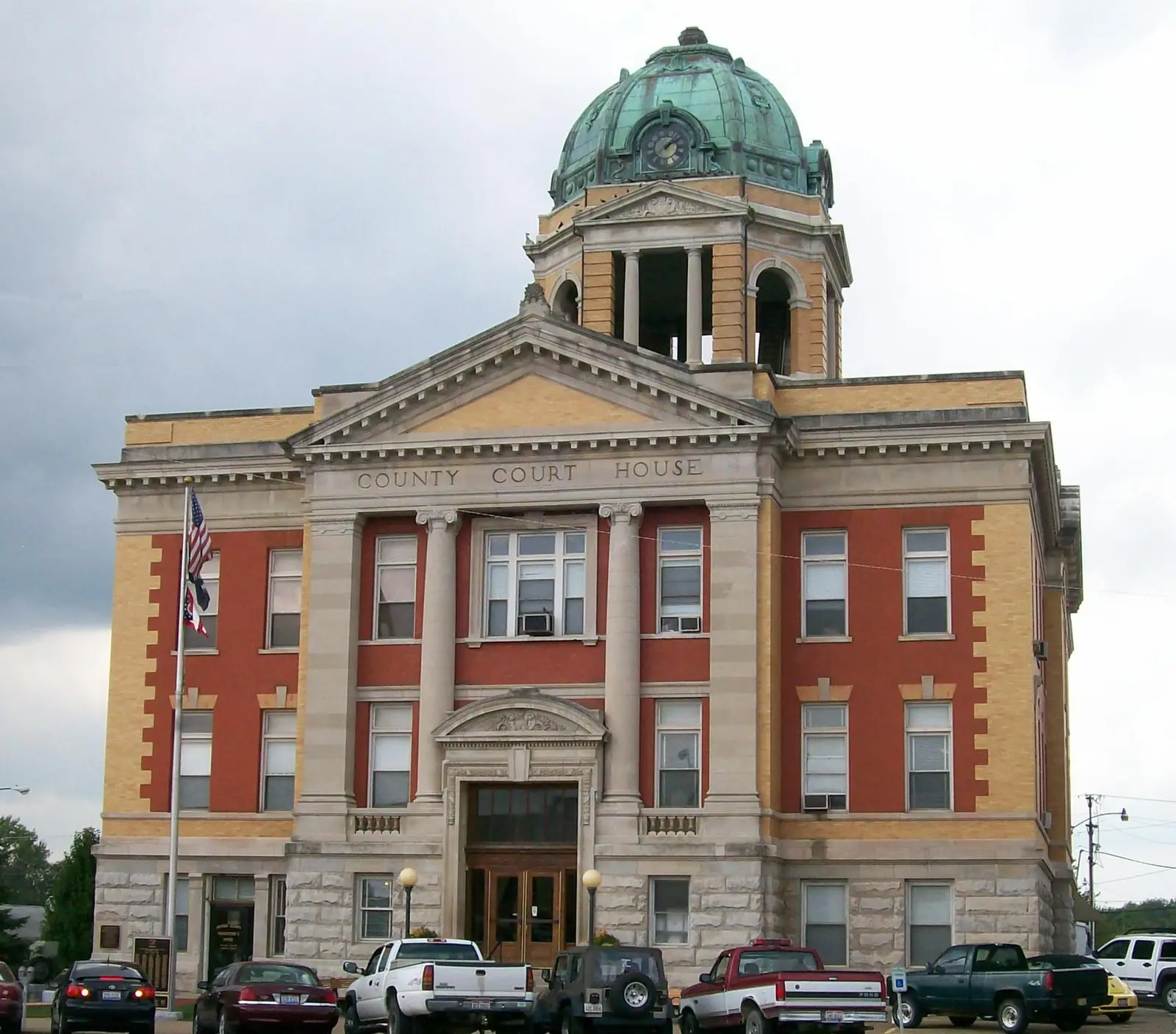
Monroe County sits on the Ohio River across from West Virginia. Its courthouse, in Woodsfield, has a green dome. In 2018 the county voted for DeWine by 28 points and against Brown by 5. No county in the state put more distance between Brown and the Democrat running for governor.

A three-story brick and stone courthouse with columns over the door and a green copper dome, with pickup trucks parked in front.
The Monroe County Courthouse in Woodsfield. Photo: Bwsmith84, CC BY 3.0, via Wikimedia Commons.

Brown ran ahead of that Democrat, Richard Cordray, in all 88 counties that year. The big counties supplied most of the extra votes: about 27,000 in Cuyahoga, 23,000 in Franklin. The widest gaps in percentage terms were in places like Monroe: Belmont and Harrison nearby, and Henry, Williams, Putnam and Seneca in the farm country of the northwest. The gap was smallest in Paulding County and in the Cincinnati suburbs.

How far the Democrat for Senate ran ahead of the other Democrat, county by county

Three Ohio elections with a Senate race and another statewide contest on the same day. “The gap” is the Senate Democrat’s margin minus the other Democrat’s, in points, in the same county. Darker means a wider gap. Tap a county.

Brown ran ahead of Cordray in all 88 counties

Outlined: voted for Brown and for DeWine (7 counties)

Monroe County

U.S. Senate
Renacci +4.72,518 to 2,765
Governor
DeWine +28.41,760 to 3,219
The gap
23.7points; 758 more votes for Brown than Cordray

Widest gaps

Narrowest

Statewide, 2018: U.S. Senate D+6.8 (Brown 2,358,508, Renacci 2,057,559); governor R+3.7 (Cordray 2,070,046, DeWine 2,235,825). Counties that voted for Brown and for DeWine: Ashtabula, Erie, Lake, Montgomery, Ottawa, Portage, Wood.

Source: Ohio Secretary of State, official county results for the general elections of Nov. 6, 2018 (amended), Nov. 8, 2022, and Nov. 5, 2024. Margins are shares of all votes cast for candidates in that contest. County comparisons describe electorates, not individual voters.

Six years later Monroe County voted for Donald Trump by 60 points. Brown lost it by 45, which was again the widest gap in Ohio. He ran ahead of Kamala Harris in every county in the state and lost his seat by 3.6 points.

In August 2024 Brown went to Weirton, W.Va., across the river, for the reopening of a plant. Doug Zamborski, a safety engineer there, told NPR’s Ximena Bustillo he was “100%” voting for Brown and also voting for Trump. Joe Plott, a TimkenSteel worker who had driven over from Canton after a midnight shift, explained how the men he works with keep the two apart: “what Brown could do for Ohio and what Trump will do for the nation.”

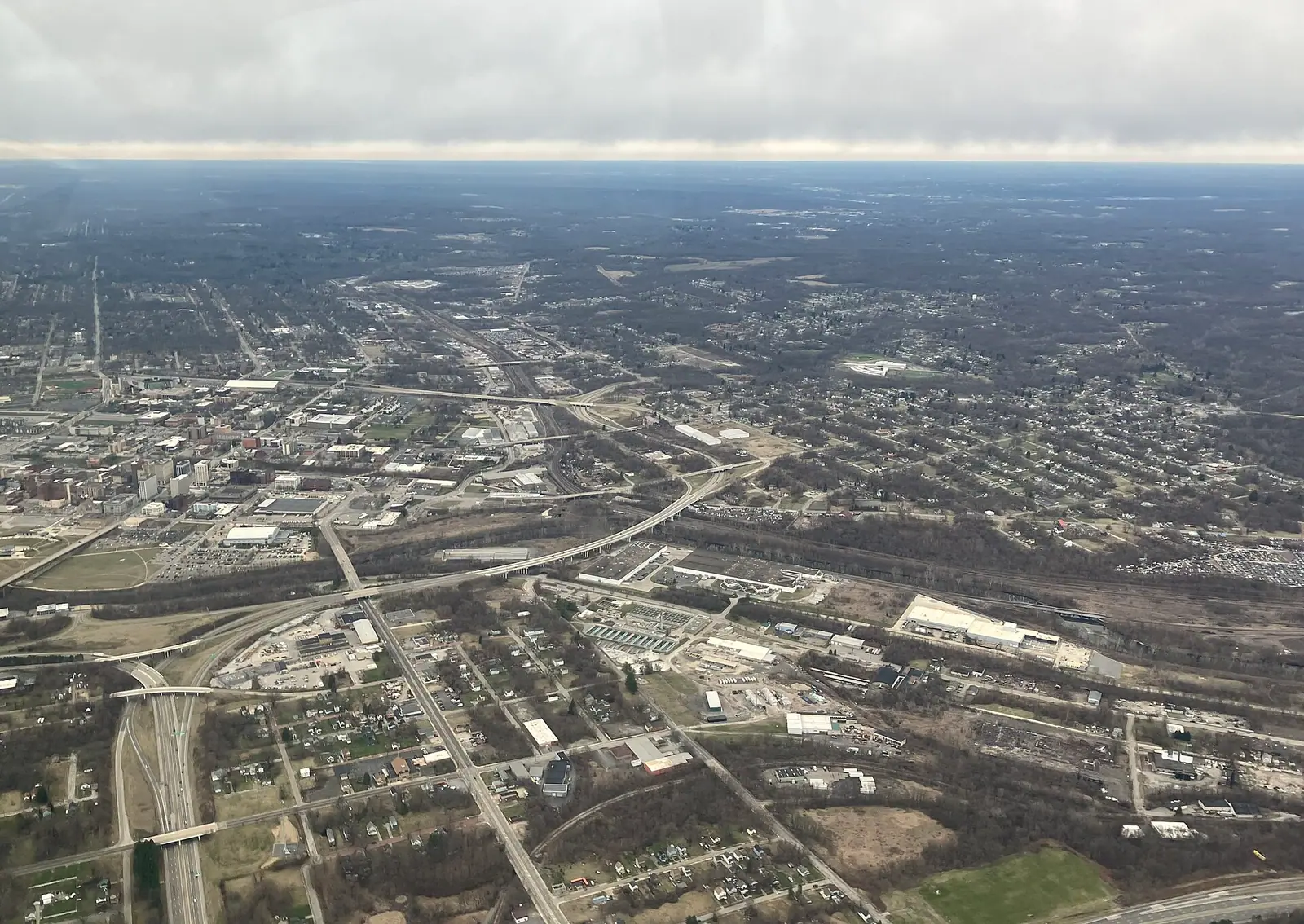
Of the seven counties that voted for both Brown and DeWine, six had left Brown by 2024: Ashtabula, Erie, Lake, Ottawa, Portage and Wood. He lost eight counties in all between those two elections. One was Mahoning, which holds Youngstown and which he had carried by 21 points; he lost it by 220 votes out of about 111,000. “You saw me almost once a month for 18 years,” he told David Skolnick of the Tribune Chronicle in January, and he said he would not assume those voters were coming back.

An aerial view of a small city under low cloud: a cluster of mid-rise buildings at left, highways, rail lines and industrial lots, and houses among bare trees to the horizon.
Youngstown, the seat of Mahoning County, in March 2025. Photo: Designism, CC0, via Wikimedia Commons.

DeWine’s crossover vote came from other places. In 2022 he was re-elected by 25 points while JD Vance, the same day, beat Tim Ryan by 6. Five counties voted for DeWine and for Ryan: Hamilton, Lorain, Lucas, Montgomery and Summit, which hold Cincinnati, Toledo, Dayton and Akron. The difference between the two contests was widest in Lucas County, around Toledo, and in the Mahoning Valley, which Ryan represented in Congress.

DeWine is not running this year. Brown is. A county map cannot say whether the voter in Woodsfield who chose Brown and DeWine in 2018 is the same person who chose Brown and Trump in 2024.

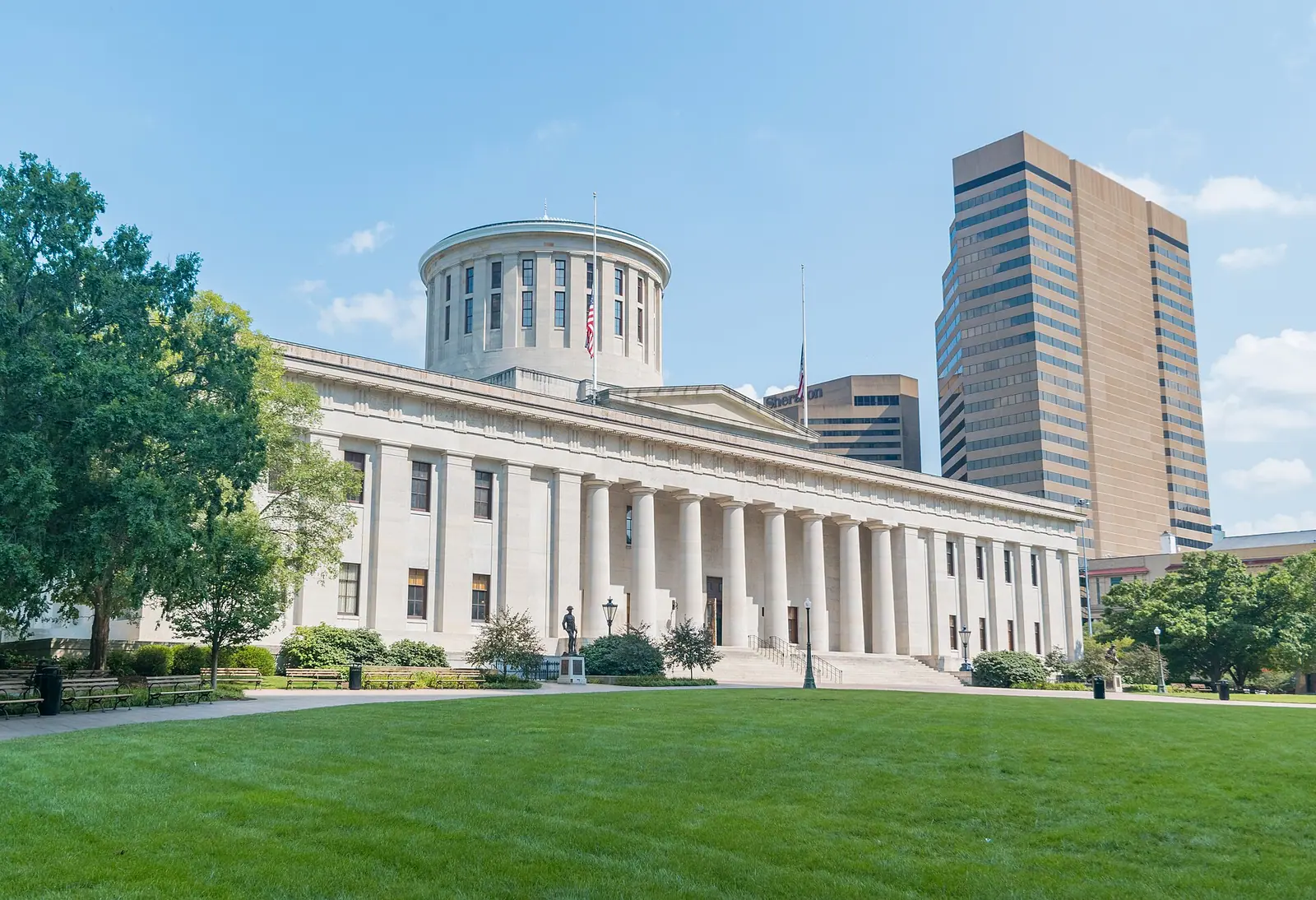
The Ohio Statehouse in Columbus, a low limestone building with a row of columns and a round drum at its center, behind a lawn.
The Ohio Statehouse in Columbus, where the governor works. Photo: Ɱ, CC BY-SA 4.0, via Wikimedia Commons.

IVThe plumbers’ endorsement

Last fall the Ohio State Association of Plumbers and Pipefitters endorsed Vivek Ramaswamy for governor. It also endorsed Sherrod Brown for Senate. So did the Central Midwest Regional Council of Carpenters, NOTUS and Signal Ohio reported. Husted has taken some of Brown’s old labor support for himself: the Operating Engineers local that covers the Mahoning Valley backed Brown in 2024 and backs Husted now. “He lost by 200,000 votes,” Husted told NOTUS. The official margin was 206,434.

The certified ballot lists three candidates for the Senate seat, which carries the two years left in Vance’s term: Brown; Husted; and William B. Redpath, a Libertarian. For governor it lists Acton with David Pepper, Ramaswamy with Robert A. McColley, and the Libertarians Don Kissick and James L. Mills. Acton, a physician, ran the state health department under DeWine in 2019 and 2020. Ramaswamy, a businessman, ran for president in 2024. Early voting begins Oct. 6.

The forecast puts the Senate race at D+1.5 and the governor’s race at D+0.6, each inside a range more than a dozen points wide. It produces those figures by simulating the whole election 100,000 times, and in every simulation each race in the country gets a winner. A good night for Democrats nationally lifts Brown and Acton together. Each race also moves on its own.

Counted that way, the likeliest result is Brown and Acton, 38 times in 100, then Husted and Ramaswamy, 25 times. Ohio splits in 37: Brown and Ramaswamy in 22, Husted and Acton in 15.

The four ways November can go

Chances in 100 for each pair of winners, counted from the forecast’s simulated election nights. The four add to 100. Move the national mood and all four move at once.

BrownActon

38in 100

Both Democrats

BrownRamaswamy

22in 100

Split

HustedActon

15in 100

Split

HustedRamaswamy

25in 100

Both Republicans

A split, either way
37 in 100
Brown wins
60 in 100 (D+1.5)
Acton wins
54 in 100 (D+0.6)
Chance of each outcome by national environment shift
ShiftBrown and ActonBrown and RamaswamyHusted and ActonHusted and Ramaswamy
10 more Republican591175
9 more Republican7111270
8 more Republican9121366
7 more Republican11141461
6 more Republican13151656
5 more Republican17171650
4 more Republican21181645
3 more Republican25191640
2 more Republican29201635
1 more Republican33211630
Forecast38221525
1 more Democratic44211421
2 more Democratic50201218
3 more Democratic55191115
4 more Democratic60181012
5 more Democratic651799
6 more Democratic691687
7 more Democratic731575
8 more Democratic771364
9 more Democratic801253
10 more Democratic831142

Source: Call the Map forecast, edition ctm-2.2-20261005-b2ee7f1a28f9, as of 2026-10-05; this figure updates with the forecast. The four chances are counted over the 2,000 simulated election nights the edition publishes and fitted so each race’s total equals its published chance. A shift moves the Senate race by 0.8 of a point and the governor’s race by 0.7 for each point of national movement, the response the forecast’s own scenarios use. A shifted mood is a what-if, not a forecast.

That is fewer than the six in ten among the close elections since 2008, and more than the one in five among all of them. The forecast ties the two Ohio races together loosely. Across its simulations their margins have a correlation of 0.31, on a scale where 1 is lockstep and 0 is no connection. A split is likeliest, at 37 in 100, in a year one point more Republican than the forecast expects.

The forecast has Brown running 0.9 points ahead of Acton. In 2018 he finished 10.6 points ahead of Cordray, and in 2024 7.6 ahead of Harris. In neither year did the other Democrat outrun him in a single county.

The plumbers’ union is on record for Brown and Ramaswamy. In Ashtabula, Erie, Lake, Montgomery, Ottawa, Portage and Wood counties, the voters who chose Brown and the DeWine–Husted ticket in 2018 will find Brown and Husted on the same line.