The Fetterman Inversion
Four years ago John Fetterman was the hoodie-wearing hero of Democratic populism. Today he is more popular with Pennsylvania Republicans than with Democrats, and he just appeared on the screens of a Republican convention. The numbers show a transformation stranger than either party's caricature.
The request went to the wrong senator first. That was the point.
In July a Republican operative named Tony Sayegh took an idea to Dave McCormick, the junior senator from Pennsylvania. The organizers of the party’s first midterm convention wanted what Axios later reported they called, among themselves, an “Oh sh*t” moment: something on the big screen in Dallas that would make a Republican crowd sit up and would travel afterward on its own. They had considered people who had left the Democratic Party. What they wanted more was someone who had not.
Could McCormick get John Fetterman?
“I’ll ask him,” McCormick said. Within days, Fetterman was in.
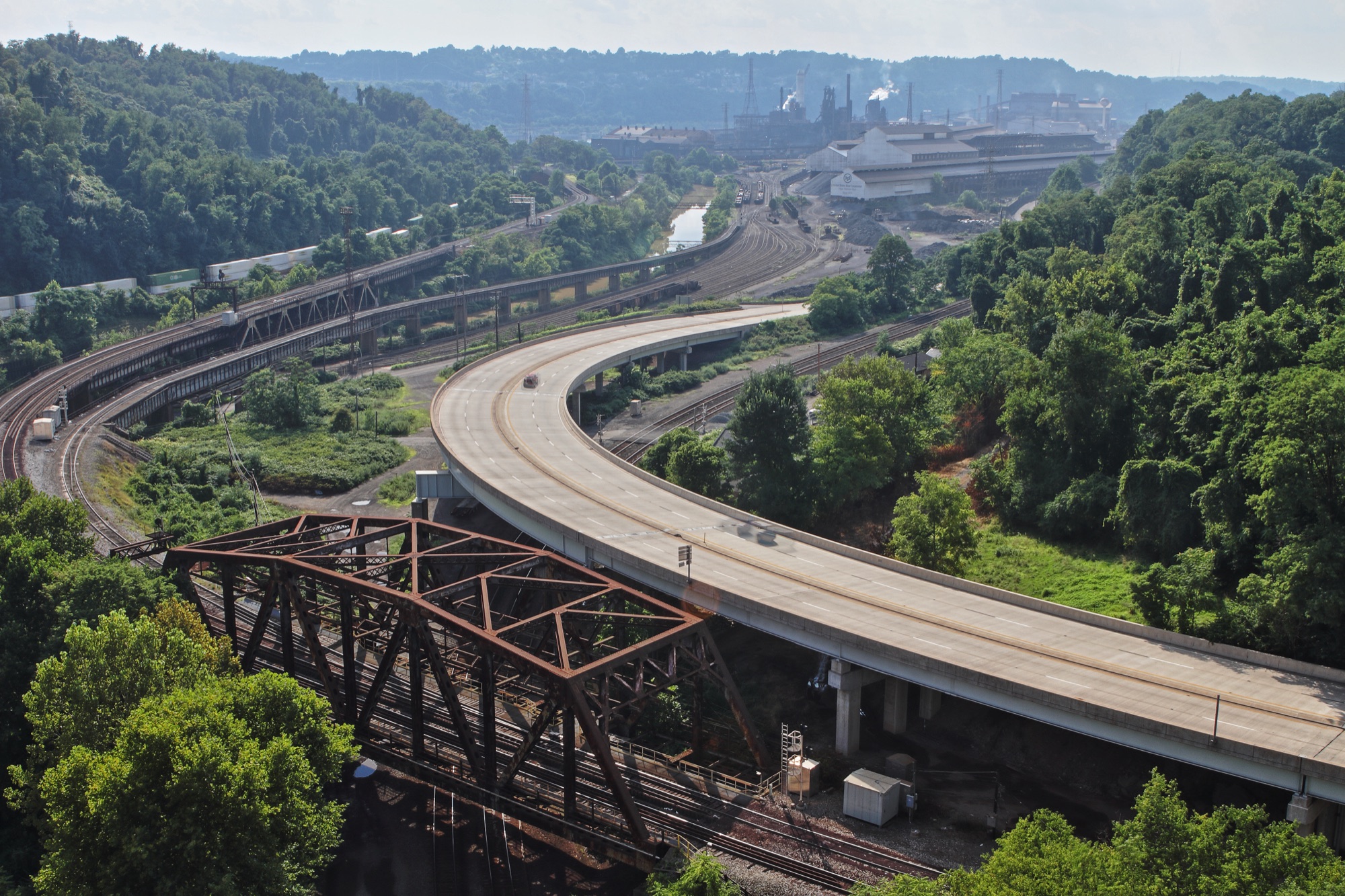
He would not fly to Dallas. He would record something outside the steel mill near his house in Braddock instead, and McCormick’s office would send the videographer. No script. Nobody on his own staff was told. On Wednesday, September 9, inside the American Airlines Center, between speakers warning the hall about socialism, the screens filled with a face the crowd had spent four years being told to distrust.
“Why am I here talking to you today?” he asked them. “Because, well, I’m a common-sense Democrat.”
He would always stand with America, he said, and always reject “the extremes and socialism and that anti-American way of life.” He called McCormick, of “a different party,” his great friend. The two of them would work with President Trump “to fight and defend the steel way of life right here in the Steel Valley.” Within the hour the White House’s rapid-response account had posted the clip under three words: “Based John Fetterman.”
His staff learned of it when the convention did. That night his office put out a statement: a lifelong Democrat, votes overwhelmingly with his party, and if the Senate flipped in November, still the fifty-first vote he had promised.
Both halves of that are true, and that is the puzzle. The man on the screen in Dallas votes with the Democratic caucus 87.9 percent of the time. The party that elected him no longer wants him at its rallies. The party he was elected against, by its own polling, would like to keep him. Something happened to John Fetterman. The story everyone tells, that a progressive had a stroke and woke up a conservative, is wrong in a way the record can prove. The real story begins before he was famous, and it turns on a date nobody has been looking at.
The parties traded John Fetterman
Quinnipiac asked Pennsylvania voters the same question four times. Move through the releases and watch which party approves of him.
Jan. 2024
the reversal in thirty months
Jul. 2026
Quinnipiac University, Pennsylvania registered voters; releases of Jan. 10, 2024 (n=1,680), Oct. 1, 2025 (n=1,579), Feb. 25, 2026 (n=836) and Jul. 15, 2026 (n=895). Independents: 42–43, 43–43, 48–37, 44–48. The question is job approval, not favorability; the August NYT/Inquirer/Siena survey asked favorability and found the same shape.
The parties traded him
The number that organizes everything else is a poll, asked four times.
In the first week of January 2024, Quinnipiac asked 1,680 Pennsylvania voters whether they approved of their junior senator. Democrats approved by eighty to ten. Republicans disapproved by seventy-five to sixteen. Ordinary numbers for a Democrat a year into the term.
By September 2025, Democratic approval had fallen to thirty-three and Republican approval had risen to sixty-two. In February the lines crossed for good. In July: Democrats nineteen to sixty-nine against him, Republicans seventy-seven to twelve for.
Subtract one party’s approval from the other’s. In January 2024 the gap was sixty-four points in the Democrats’ favor. In July 2026 it was fifty-eight in the Republicans’. A swing of 122 points in thirty months. Few politicians in America have had their partisan standing move that far, that fast, without changing parties.
It is not one pollster’s artifact. In August the New York Times, the Philadelphia Inquirer and Siena College asked 760 likely voters the question the other way, about favorability. Seventy-nine percent of Pennsylvania Republicans viewed him favorably; about one Democrat in five did, and sixty-nine percent did not. He was more popular with Republican voters than McCormick, the actual Republican senator. Across the whole electorate he is still a reasonably popular senator, forty-nine favorable to forty-three. Only when you ask who is doing the approving does the floor give way.
Fetterman’s explanation, in a Washington Post op-ed in May headlined “I haven’t changed. Here’s what has,” is that the party moved and he stood still. “The president could come out for ice cream and lazy Sundays,” he wrote, “and my party would suddenly hate them.” It is a good line. It is also the second time he has explained the same distance in opposite directions. In June 2024 he told CNN: “Eight years ago, I was a progressive.” Then, the label had left him. Two years later, the party had. Same man, same facts.
Before the hoodie was an ideology
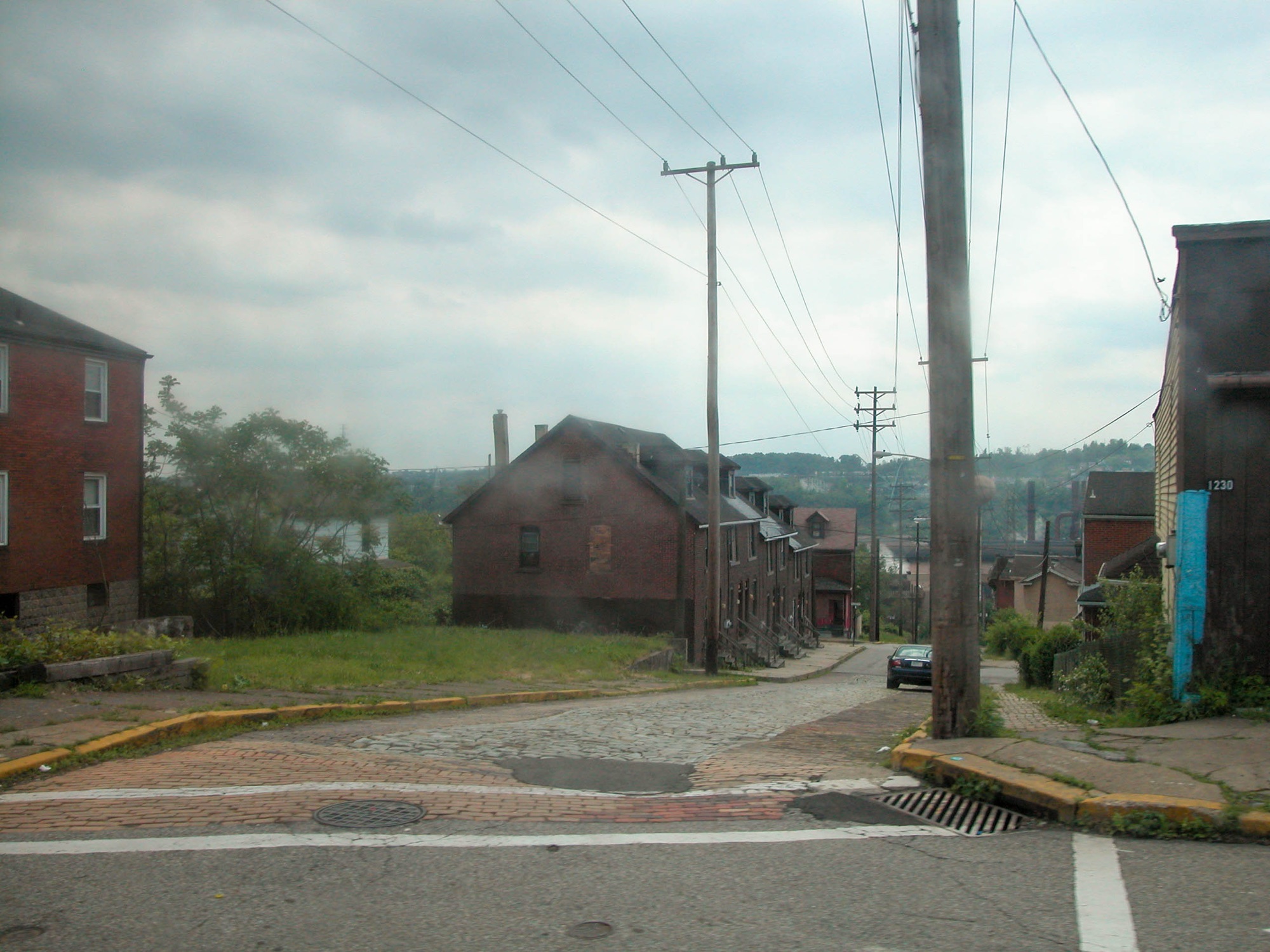
The Fetterman America met in 2022 arrived fully assembled: six foot eight, shaved head, a forearm tattooed with the dates of Braddock’s homicides, the hooded sweatshirt and cargo shorts, the house across from a steel mill in a town that had lost nine-tenths of its people. It was the most effective working-class brand a Democrat had built in a generation, and it was built by a man who had never been working class.
He was born in Reading in 1969 and raised in York, the son of Karl Fetterman, a partner in an insurance firm, in a family he has described as Reagan Republicans. A business degree at Albright, an MBA at Connecticut, a master’s from Harvard’s Kennedy School. Two years with AmeriCorps teaching GED classes in Pittsburgh’s Hill District, then Braddock in 2001 to run a youth program. In 2005 he won the Democratic primary for mayor of a borough of about 2,000 people by a single vote, a provisional ballot. The job paid $150 a month.
The part of the biography that matters more surfaced in the Inquirer in August 2022, in the middle of the Senate race. While he was mayor, well into his forties, his parents supported him. In 2015 alone they gave him and his wife $54,000, as four gifts of $13,500, each just under the gift-tax threshold. The campaign said the support had since stopped and would not say whether 2015 was typical.
None of that makes Braddock a performance. He did move there, teach the classes, bury the kids whose dates are on his arm, and spend thirteen years pulling money toward a town the region had written off. But the money explains the method. A $150-a-month mayor with no cushion has to work through his borough council. Fetterman did not have to and, the Washington Post found in 2022, increasingly did not. He largely stopped going to council meetings and ran his projects through Braddock Redux, a nonprofit bankrolled in part by his family, which the Post called his shadow government and which took in about $245,000 from insiders between 2007 and 2013. When Levi’s put a million dollars into the town for an ad campaign, it went through the nonprofit, not the borough.
The council fought him. Its president told the Pittsburgh City Paper in 2010 that the mayor “seem to want to be the white savior for this community.” Residents of an overwhelmingly Black town told HuffPost in 2022 that the renewal had been for other people: “The only ones who’ve benefited from him being a famous politician on the backs of saving the Black community is him and his family.” When he ran for the Senate, Braddock’s own mayor endorsed his primary opponent.
Both readings are true. He got things done the council would not have, and the town has an urban farm, a free store and a brewery to show for it. And fifteen years before he reached the Senate he had learned that the institution he nominally belonged to could be worked around, that his own judgment was a better guide than its procedures, and that the people who objected could be outlasted. His contempt for institutions did not begin with Chuck Schumer. It began at home.
The afternoon he chased a man with a shotgun
On January 26, 2013, Fetterman heard what he took for gunfire near his house, saw a man running, followed him into North Braddock in his truck and held him at the roadside with a 20-gauge shotgun until police arrived. The man was Christopher Miyares: Black, unarmed, wearing headphones. He said he had been out for a run. Police found no weapon. No one was charged.
They disagree about the gun. Miyares told WTAE that week that Fetterman “pulled a shotgun and aimed it at my chest.” Fetterman said it was never pointed, the chamber was empty and the safety on, and, to the Tribune-Review: “I believe I did the right thing, but I may have broken the law.”
Almost nobody noticed in 2016. It became a Republican attack ad in 2022, and it stuck because it did not fit: a criminal-justice reformer who had, one afternoon, decided that the law enforcement available to him was himself. As with the council, the tell was not the politics. It was the confidence.
The progressive years, and what we misremember
By 2016 he was a genuine figure of the left: the only Senate candidate in Pennsylvania to endorse Bernie Sanders, attacking the establishment favorite for taking oil-and-gas money (“we don’t take fracking money”), telling a reporter most candidates were “like TGI Fridays, franchises of what the party wants them to be.” He finished third with 19.49% of the vote, 307,090 Pennsylvanians, enough to prove the giant from Braddock had a constituency.
As lieutenant governor from 2019 he built the résumé the left would later say he betrayed. Sixty-seven counties on marijuana legalization. Pride flags on the Capitol balcony; as mayor he had officiated at same-sex weddings while the state still banned them. As chairman of the Board of Pardons he abolished the application fees and turned a moribund clemency process into one that recommended forty-six commutations of life sentences in four years, against six in Tom Wolf’s first term and none under Tom Corbett.
That is the Fetterman many Democrats believed they were sending to Washington, and the story they now tell depends on it: the progressive who went to the Senate and became something else. The dated record does not support the timing.
Israel first, the issue most associated with his conversion. On April 11, 2022, a month before the stroke, he told Jewish Insider he was “not really a progressive in that sense,” that there was “no daylight” between him and “these kinds of unwavering commitments to Israel’s security,” and that his views did not run with “some of the more fringe or extreme wings of our party.” Fracking: “I don’t support fracking at all and I never have,” as a candidate for lieutenant governor in 2018; “I support fracking,” on NBC in October 2022. A real reversal, made during the campaign, before a single Senate vote. The police: TIME’s profile of May 11, 2022, two days before the stroke, records him as “pro-policing, pro–community policing, pro–funding the police,” calling “defund” an “absurd phrase,” and softening Medicare for All into “expanding health care access, whatever that looks like.” The same profile carries the pitch that made him the nominee: he would be “the Democrats’ 51st vote.”
The pieces of the later Fetterman the left finds hardest to forgive were on the record, in his own voice, before May 13, 2022. Afterward, the change was not in what he believed about Israel. It was in everything around it.
How progressive was Fetterman, really?
Some of the changes are real. Some are failures of memory. Switch the lens on every card at once.
Israel
partlyThe position predates the stroke. In April 2022 he told Jewish Insider there was “no daylight” between him and Israel's security and that he was “not really a progressive in that sense.” After October 7 the change was the volume, and the fights.
Fracking
changedA real reversal, and it happened during the 2022 campaign, before he reached the Senate. It is not a post-stroke change; it is a general-election change.
Police
unchangedBoth are true at once, and both were on the record by May 2022. The clemency record and the police line coexisted in the same candidate.
Health care
partlyThe softening was complete by the 2022 primary. On the Senate floor, the roll-call record shows one break with his caucus in 54 health and abortion votes.
Immigration
changedA real shift in emphasis from 2024 on. On the roll calls it is nine breaks in 89 immigration-tagged votes, most of them in 2025.
The filibuster
changedA complete reversal, argued in his own name, and explicitly tied to being in the minority.
Trump
changedThe largest change in the record, and the one the roll calls date precisely: seven breaks with his caucus in the whole of 2023–24, one hundred and sixty since January 2025.
Unions and LGBTQ rights
unchangedUnchanged. The parts of the old Fetterman that remain are the parts that do not generate national television.
Sources for each card are in the notes: Jewish Insider (Apr. 11, 2022), TIME (May 11, 2022), CNN KFile on fracking (Oct. 18, 2022), the Inquirer on the Board of Pardons (May 11, 2022), his two Washington Post op-eds (May 7 and Jul. 27, 2026) and the Voteview roll-call record.
Then he nearly died
On Friday, May 13, 2022, four days before the primary, he was admitted to Lancaster General with a stroke. The pacemaker and defibrillator went in on primary day, which he won by more than thirty points from a hospital bed. Three weeks later his cardiologist’s letter told voters what he had not: a 2017 diagnosis of atrial fibrillation and a weakened heart, medication prescribed, a follow-up ordered, and then nothing. He “did not go to any doctor for 5 years and did not continue taking his medications.” The fibrillation caused the stroke. “I almost died,” Fetterman said.
He came back with an auditory processing disorder, sound arriving before meaning, and debated Mehmet Oz for an hour on live television with captions running. It was painful to watch; he opened by saying so. Two weeks later he beat Oz by 4.9 points, 2,751,012 votes to 2,487,260, and flipped a Republican seat.
Six weeks into the term he vanished again. On February 15, 2023, he checked himself into Walter Reed for clinical depression. The discharge letter his office released on March 31 was unusually specific: severe symptoms, minimal speech, slowed thinking and movement, guilt and worthlessness, inadequate eating and drinking; no suicidal ideation; after six weeks, remission. He was back in the Senate on April 17.
Here the temptation is obvious, and the record refuses it. A stroke does not make a man conservative. Depression does not explain a vote on Iran. No reporter can diagnose a senator from his ideology, and this one will not try. But the dates do something more useful than a disclaimer: they separate the two stories. The positions the left came to hate him for were stated before the stroke. And the votes that separated him from his caucus did not begin when he came out of the hospital. They began twenty-one months later, on a particular Tuesday in January.
Two clocks started running. They are not the same clock.
The medical timeline on the left is what his doctors published. The political timeline on the right is what he said and did. The columns are not joined.
Health, as published by his doctors
- 2017Diagnosis
Atrial fibrillation and a decreased heart pump. Medication prescribed; follow-up advised. By his cardiologist's account he did not return to a doctor for five years.
- May 13, 2022Stroke
Four days before the Democratic primary, at Lancaster General. “I almost died,” he said when the cardiologist's letter was released in June.
- May 17, 2022Pacemaker, defibrillator
Implanted on primary day. Cardiomyopathy disclosed three weeks later.
- Oct. 25, 2022The debate
Sixty minutes in Harrisburg with closed captions, after a doctor's letter ten days earlier described an auditory processing disorder.
- Feb. 15, 2023Walter Reed
Admitted for clinical depression six weeks into the term. The discharge letter described severe symptoms, minimal speech, slowed movement, guilt and worthlessness, and no suicidal ideation.
- Mar. 31, 2023Discharge
“Depression is now in remission.” Back in the Senate on April 17.
Politics, in his own words and votes
- Feb. 2016Sanders
The only Pennsylvania Senate candidate to endorse Bernie Sanders. Attacks McGinty for fracking money: “we don't take fracking money.”
- 2018“I don't support fracking at all”
As a candidate for lieutenant governor: “and I never have.”
- Apr. 11, 2022Israel, before the stroke
To Jewish Insider: “I'm not really a progressive in that sense … there is no daylight between myself and these kinds of unwavering commitments to Israel's security.”
- May 11, 2022TIME
“Pro-policing, pro–community policing, pro–funding the police”; ‘defund’ is “an absurd phrase.” Two days before the stroke.
- Oct. 2022“I support fracking”
To NBC, in the general election.
- Oct. 2023October 7
“Now is not the time to talk about a ceasefire”; posters of the hostages on his front-office wall; “hard disagree” with the Biden administration over Rafah the following May.
- June 2024“Eight years ago, I was a progressive”
The label, he said, had left him.
- Jan. 2025Mar-a-Lago
The first Democratic senator to visit the president-elect. Then the votes: alone among Democrats to advance Hegseth and Ratcliffe, and to confirm Bondi and Huckabee.
- May 7, 2026“I haven't changed. Here's what has.”
Washington Post op-ed. “The president could come out for ice cream and lazy Sundays, and my party would suddenly hate them.”
- July 6, 2026Common Ground PA
A joint fundraising committee with Dave McCormick's campaign and both senators' leadership PACs, registered with the FEC.
- July 27, 2026The filibuster
“Halfway through my first term, I now recognize how important the filibuster is.” He had run on abolishing it.
- Sept. 9, 2026Dallas
A one-minute video, recorded in front of the Edgar Thomson works, shown at the Republican midterm convention.
Walter Reed’s discharge letter describes severe depression, its treatment and its remission. It does not supply, and nobody outside his care can supply, a medical explanation for a Senate vote. The positions the left came to hate him for were stated in April and May 2022, before the stroke; the votes that separated him from his caucus arrived in January 2025, twenty-one months after his discharge, on the day a new president took office.
Two Congresses
Almost everything written about Fetterman’s transformation is built on television: the Fox hits, the hostage posters in his front office, the pilgrimage to Mar-a-Lago. The Senate keeps a better record, and it points somewhere specific.
Call the Map took every roll call of his term from Voteview, the academic archive of congressional voting, and scored each against his own caucus. There have been 1,581 since January 2023. He voted on 1,377, and on 167 he voted against a majority of Democrats and the independents who caucus with them: 12.1 percent, roughly one vote in eight. High for a Democrat. Nowhere near a Republican.
The average hides the story. Split the record at the change of Congress and it becomes two senators. In 2023 and 2024, the years of the stroke’s aftermath, Walter Reed, October 7 and the Rafah fight, he broke with his caucus on 7 of 546 votes. Seven. Voteview’s party-unity score for him in those years is 98.6 percent, a hair under the Democratic median of 99.4. The most talked-about Democratic dissenter in the country was, on the floor, indistinguishable from his colleagues.
Since January 2025 he has broken with his caucus on 160 of 831 votes, 19.3 percent. His unity score has fallen to 79.4, the lowest of any Senate Democrat, against a median of 96.1. Ninety-one of the breaks were on nominations. On 44 roll calls he was the only Democrat on his side, and that list reads like the program of the convention he later appeared at: the motions to proceed on Pete Hegseth and John Ratcliffe on January 21, 2025, the day after the inauguration (he then voted against confirming Hegseth); Pam Bondi; Mike Huckabee for ambassador to Israel; Kevin Warsh to chair the Federal Reserve; sanctions on the International Criminal Court; the Republican continuing resolution before the September 2025 shutdown; seven cloture votes on this spring’s appropriations bill on which every other Democrat voted no.
And Iran. Fourteen times since June 2025 the Senate has voted on resolutions to withdraw American forces from unauthorized hostilities against Iran. On all fourteen, every other voting Democrat voted yes and Fetterman voted no. It is not war-powers resolutions he objects to; when the same mechanism was aimed at Venezuela, in November and January, he voted with his caucus both times. It is Iran. The topic tally makes the shape plain: foreign policy and personnel are where he leaves the caucus. On health care and abortion he has broken with it once in fifty-four votes.
So the data do not show a Democrat who became a Republican. They show a Democrat whose disagreements with his party fall precisely where a national political identity is made: Israel and Iran, Trump’s personnel, the border, the shutdown fights. On the quiet domestic work of the Senate the old Fetterman is easy to find. And they date the change. Not to the stroke, not to the hospital, not to October 7. To the return of Donald Trump.
He sounds more Republican than he votes. Until January 2025.
1,581 roll calls from 2023-01-23 to 2026-08-08. A break is a vote against the position of a majority of the Democratic caucus. The split by Congress is the finding.
Bars are drawn to a common scale of 25%. In the 118th Congress the seven breaks include the Mountain Valley Pipeline rider and a Turkey arms-sale disapproval. In the 119th, 160 breaks include 91 nomination votes and 14 Iran war-powers votes on which every other voting Democrat took the opposite side.
Topics are assigned by keywords in the Senate’s own vote descriptions; a vote can carry only one tag, and nominations are tagged before subject. The pattern survives any reasonable relabelling: foreign policy and personnel are where he leaves the caucus; health care is where he almost never does.
- 2025-01-21Hegseth for Defense, motion to proceedYEA
- 2025-01-21Ratcliffe for CIA, motion to proceedYEA
- 2025-01-28Sanctions on the International Criminal Court, clotureYEA
- 2025-02-04Bondi for Attorney General, confirmationYEA
- 2025-04-09Huckabee for ambassador to Israel, confirmationYEA
- 2025-06-27Iran war-powers resolution, first of fourteenNAY
- 2025-09-19Republican continuing resolution before the shutdownYEA
- 2026-03-12Consolidated appropriations, cloture (one of seven such votes)YEA
- 2026-05-13Warsh to chair the Federal Reserve, confirmationYEA
- 2026-06-23House war-powers resolution on IranNAY
Ten of the 44 roll calls on which he was the lone Democrat, selected for consequence. The full list is in the story’s data file.
One cell per month, January 2023 to August 2026. Of the 204 missed roll calls, 66 fall in February and March 2023. Outside that treatment period he missed 138 of 1502, about 9.2%; the Senate median is under three percent.
Was he ever the candidate the brand said he was?
The legend was partly a claim about geography: that a man who looked like him, from a place like Braddock, could reach the voters other Democrats had lost. The 2022 ballot contains a controlled experiment on that claim. The same voters, on the same day, also elected a governor.
Josh Shapiro, a lawyer from the Philadelphia suburbs with none of the iconography, beat Doug Mastriano by 14.8 points. Fetterman, on the line below, beat Oz by 4.9. About the same number of people voted in both contests; 280,000 more of them voted for Shapiro than for Fetterman, and 249,000 more for Oz than for Mastriano. He did not run ahead of the governor in a single one of the sixty-seven counties, and the counties where he ran furthest behind, by more than twelve points, were Cumberland, Cambria, Lebanon, Westmoreland and Butler: the industrial west and the south-central exurbs, the country the hoodie was supposed to unlock. Mastriano was an unusually weak opponent, and some of the gap is his. Oz was hardly a strong one.
The map below lets you switch to the 2024 presidential result, which Trump won by 1.7 points, and it is worth being careful there. The counties where the Senate ticket fell furthest short in 2022 are not the counties that swung hardest to Trump in 2024; if anything the relationship runs the other way. The 2022 gap was not a preview of the state’s drift. It was a verdict on a candidate, delivered by people who were voting Democratic on the same ballot.
Was he ever uniquely electable?
The brand said a tattooed mayor from a mill town could reach voters other Democrats could not. The 2022 ballot ran a controlled experiment: the same voters, the same day, a governor’s race on the line above. Scroll the layers.
A five-point win, built in the usual places
Fetterman beat Oz by 4.9 points statewide. Philadelphia, Allegheny, Montgomery and Delaware counties did the work, as they do for every Democrat. He carried 13 of 67 counties.
Shapiro won by fifteen on the same ballots
Josh Shapiro beat Doug Mastriano by 14.8 points, with 56.5% of the vote to Fetterman’s 51.2%. About the same number of people voted in both contests. The difference is what those people did with their second choice.
Fetterman ran behind Shapiro in all 67 counties
Not one county gave the Senate ticket a larger margin than the governor’s. The deficit was largest in the industrial west, the country his brand was supposed to unlock, and in the exurbs of the south-central: Cumberland, Cambria, Lebanon, Westmoreland and Butler, each by more than twelve points.
Then the state voted for Trump
In 2024 Pennsylvania went to Trump by 1.7 points. The gap did not predict it: the counties where Fetterman ran furthest behind Shapiro were not the ones that swung hardest to Trump two years later (Cumberland actually moved toward Harris). The 2022 shortfall was a verdict on the candidate, not a preview of the state.
Behind Shapiro in every county
Fetterman’s margin minus Shapiro’s, in points of each county’s vote. A negative number means voters who chose Shapiro did not all choose Fetterman.
A county that voted Fetterman in 2022 and Trump in 2024 does not prove that the same people switched. The comparison shows where the coalitions overlapped, and where the Senate ticket ran short of the governor’s on the same day: 280,125 more Pennsylvanians voted for Shapiro than for Fetterman, and 248,783 more voted for Oz than for Mastriano.
2022 returns: Pennsylvania Department of State county breakdowns, cross-checked against the MIT Election Data + Science Lab precinct file (64 of 67 counties identical; the rest differ by under 600 votes in a pre-certification snapshot). He carried 13 of 67 counties. 2024 presidential returns from Call the Map’s county dataset. County margins are shares of that county’s vote in that contest.
The other story
Political disagreement is one kind of story. Whether a senator is doing the job is another, and from the spring of 2025 the second kind began to appear in print, sourced to people who had worked for him.
In May 2025, New York magazine reported that Adam Jentleson, his former chief of staff, had written to the Walter Reed doctor who treated him, a year after leaving the office, with what he called concerns: that nobody knew whether the senator was taking his medication, that he was “lying in ways that are painfully, awkwardly obvious to everyone in the room.” Fetterman called it a one-source hit piece from disgruntled staff. The same month the Inquirer reported a meeting with five teachers’ union representatives that ended after he shouted and banged his fists on the table; a staffer stopped the meeting and, by the AP’s account, broke down in the hallway. He called it a spirited conversation about education cuts. The Post had reported the year before, from three aides, that he texted and took FaceTime calls while driving. On June 9, 2024, he rear-ended another car on Interstate 70 in Maryland; state police found him at fault, and a witness put his SUV well over the limit.
On September 4 this year the Wall Street Journal published the most detailed account, under the headline “Little Interest Senator”: constituent meetings blown off, legislative review neglected, a meeting with paralyzed veterans canceled before a Fox News appearance, hearings attended for a minute or less, a text joking that Children’s Hospital of Philadelphia wanted free trips to Washington. On CNN two days later he called the story “lies, half-truths, innuendos, smears and anonymous,” said the texts were “stripped of any context,” said he had been at home throwing up before the veterans’ meeting, and apologized for the hospital remark: “a dumb joke.”
The roll-call record can test one piece of this. He has missed 204 of 1,581 votes, 12.9 percent, against a Senate median under three. Sixty-six of those fall in February and March 2023, while he was at Walter Reed; a chart that hides that is dishonest, and the one above does not. Outside those weeks he has missed about 9 percent, still three times the median. None of that proves what former staff say about meetings, and none of it is evidence about his health. It does mean the second Fetterman story, in which people who once worked for him say they no longer recognize him, is not only about ideology. He says they are wrong, every time.
Brendan Boyle, the Democratic congressman from Philadelphia, did not wait for the details: “a lazy trust fund baby who is too lazy to do the job.” Chris Deluzio, who campaigns in the state’s hardest districts, told the AP that Democrats did not want Fetterman campaigning for them, and has left open a primary challenge in 2028. The chair of the Lehigh County party put it more simply: nobody had asked to see him.
Follow the money, carefully
The lazy version of this chapter writes itself: someone paid him to change. The itemized record does not support it, and what it does support is better. The money did not lead the estrangement. It followed it, and then it built a house for it.
Money shaped Fetterman’s independence from the start, as a cushion rather than a purchase: the parents who let a $150-a-month mayor bypass his council, the family-funded nonprofit, and then, in 2022, one of the great small-dollar operations in Senate history. Fetterman for PA took in $76.3 million; $37.2 million of it, 48.8 percent, came in gifts too small to itemize. The biggest employers of his donors were Alphabet and the University of Pennsylvania. J Street, the liberal pro-Israel group, routed $193,000 to him through its PAC. He owed his seat to a few hundred thousand people who had sent twenty dollars.
That donor base is gone. Through June 30 of this year the campaign had raised $2.31 million for a race two years away, and the small-dollar share had fallen to about a fifth. His top state for itemized money is New York. J Street’s earmarks fell from $193,000 to $2,400. At the top of the 2026 employer list sit a securities-litigation firm, Robbins Geller, and Susquehanna International Group, the Philadelphia trading firm whose co-founder, Jeff Yass, is among the largest Republican donors in the country. The Intercept counted at least fourteen registered Republicans among his donors after October 2023. On June 30, 2026, Harlan Crow, the Texas developer whose gifts to Clarence Thomas made him briefly the most famous donor in America, wrote two checks to Fetterman for PA totaling $7,000.
Two things the record does not show deserve equal weight. AIPAC’s PAC has given him nothing, and no contributions have been earmarked to him through its portal; the pro-Israel money that has moved is J Street’s, moving away. And the Senate Conservatives Fund, a Republican super PAC, reported $58,818 spent against him in 2025. The right’s donors have found him. The right’s institutions have not all decided he is theirs.
His leadership PAC tells the same story in miniature. Every Vote PAC raised $176,000 last cycle and gave most of it to Democratic Senate candidates. This cycle it has raised $299,000 through July, $133,000 of it moved over from his own victory fund and the rest heavy with corporate PACs: the Realtors, the airline pilots, Verizon, PNC, Boeing, Eli Lilly, General Dynamics, Comcast. It has given $15,000 to three candidates.
Then, on July 6, 2026, a joint fundraising committee called Common Ground PA registered with the Federal Election Commission. Four accounts: Fetterman for PA; Every Vote PAC; Friends of Dave McCormick; and Pennsylvania Honor, McCormick’s leadership PAC. A donor writes one check and the committee splits it, by a formula in its paperwork, between a Democratic senator and the Republican senator from the same state, in a year when control of the Senate turns on Pennsylvania’s neighbors. McCormick’s spokesman called it a donor-driven effort. Joint committees are routine between allies. This one is not, and it does something the roll calls cannot: it makes the friendship a financial fact, with an address that is not a Democratic campaign.
The committee had filed nothing but its registration when this was published. Its first report will say whose money the friendship runs on. Until then: the Fetterman of 2022 was financed by Democrats and became a Democratic star. The Fetterman of 2026 is financed by fewer, richer people, some of them Republicans, and has built with a Republican a vehicle that anyone can fund. So far the filings answer the question of cause in one direction. The money followed.
One check, two parties
Joint fundraising committees are ordinary between allies. One shared by a Democratic senator and the Republican senator from the same state, in a midterm year, is not.
Contributions routed to his campaign through the liberal pro-Israel group’s PAC: 2021–22 against 2023–24.
Two checks dated June 30, 2026, from the Texas developer and Clarence Thomas benefactor.
No contributions from AIPAC’s PAC and no earmarks through its portal in the itemized record; a 2025 filing shows the Senate Conservatives Fund spent $58,818 against him.
FEC committee page for Common Ground PA and the Form 1 registration as reported by PoliticsPA. Every Vote PAC is Fetterman’s leadership PAC; Pennsylvania Honor is McCormick’s. Allocation terms and receipts are disclosed on the committee’s periodic reports, none of which had been filed when this was published.
Enter Donald Trump
After Trump carried Pennsylvania in November 2024, Fetterman’s independence changed character. In January he became the first Democratic senator to visit the president-elect at Mar-a-Lago; “no one is my gatekeeper,” he said. The lone-Democrat votes to advance Hegseth and Ratcliffe came the day after the inauguration, and he was the only Democrat to confirm Pam Bondi. He was one of twelve Democrats for the Laken Riley Act and its first Democratic cosponsor. When his colleagues held up protest signs at Trump’s address to Congress, he called it “a sad cavalcade of self owns and unhinged petulance” and his party “the metaphorical car alarms that nobody pays attention to.” In July, in the Post, he took back the position he had run on: “Halfway through my first term, I now recognize how important the filibuster is.” He had campaigned on abolishing it.
Meanwhile the friendship with McCormick became the closest relationship in his political life: joint appearances, the joint committee in July, and in September, in effect, the same stage. The Republicans who wanted him in Dallas understood exactly what they were buying. They did not need Fetterman to become a Republican. They needed him to remain a Democrat. A Republican attacking socialism at a Republican convention is a Wednesday. A Democratic senator doing it for them is content, and the White House treated it as content within the hour.
Fetterman’s account, as reported, is that he was nobody’s operation: he wanted to introduce a friend, knew it would anger Democrats, and did it anyway. That is entirely plausible. It also states the problem exactly. A senator’s contempt for his own party has grown strong enough that he was willing to be the centerpiece of the other one’s.
What the video said, and what each line was for
Recorded without a script in front of the Edgar Thomson works. His own staff learned of it when the convention did.
“Why am I here talking to you today? Because, well, I'm a common-sense Democrat.”
The word “Democrat” is the point. Organizers did not want a convert; they wanted a Democrat.
“I'm always going to stand with America. I'm always going to reject the extremes and socialism and that anti-American way of life.”
“Socialism” was the convention's theme. CBS's transcript renders it “extremes in socialism.”
“A different party. But I'm proud to count him as my great friend.”
Dave McCormick, whose team arranged the videographer, and whom the organizers had asked first.
“He's the kind of senator that gets the job done … fight for Pennsylvania.”
An endorsement in everything but the word, for the Republican up in 2028 alongside him.
“We will work together and will work with President Trump to fight and defend the steel way of life right here in the Steel Valley.”
Recorded in front of the Edgar Thomson works, across the street from the house he bought in Braddock.
Timings are approximate positions within a video that Axios measured at 64 seconds and CBS described as about a minute. The White House’s Rapid Response account posted the clip that night under the caption “Based John Fetterman.”
Popular with the wrong primary
Two years ago he was one of Pennsylvania Democrats’ most recognisable surrogates. This autumn the party would rather he stayed home, and has said so to the Associated Press. The arithmetic is brutal. The voters who increasingly like John Fetterman are Republicans. The voters who decide whether to renominate him in 2028 are Democrats, who at last count approved of him nineteen to sixty-nine.
Traders have noticed. A Kalshi contract pays a dollar if he leaves the Democratic Party before 2028. It traded at forty-seven cents in May and last traded, on the day this was published, at fifty-eight, on a thin book. The contracts for leaving before this election or before the end of the year sit at six and fifteen cents. In July, Quinnipiac found fifty-two percent of Pennsylvania voters wanted him to leave the party and thirty-one wanted him to stay. He has said, again after Dallas, that he will not.
Traders have made his party a coin flip
A contract paying a dollar if John Fetterman leaves the Democratic Party. Three deadlines, one senator.
Prices read from Kalshi’s public API on Sept. 14, 2026: last trade 58¢, best bid 51¢, best ask 56¢, 11,040 contracts traded, 4,705 open. A thin book: the bid–ask spread is five cents wide. His own voters put it higher than the traders do. Quinnipiac in July found 52% of Pennsylvania voters wanted him to leave the party and 31% wanted him to stay.
Approval among Pennsylvania Democrats, July 2026. Deluzio and others are already being asked.
Numbers a Republican would envy, from voters who cannot nominate him unless he changes his registration, which he says he will not.
Approval among all registered voters. Popular enough to win as almost anything, if he could get to November.
What traders pay for a dollar if he leaves the party by 2028. A coin flip, priced by strangers.
So what happened to John Fetterman?
The record is unusually good at ruling out the wrong answers.
The convenient one, a progressive who had a stroke and came out conservative, fails on both dates. His Israel position, his fracking reversal, his police line and his retreat from Medicare for All were all stated before May 13, 2022; and in the two years after the stroke and the hospital he was one of the most reliable Democratic votes in the chamber.
The one he prefers, in which he stood still while the party moved, fails on the same record. A party does not move a senator from seven breaks to a hundred and sixty in the space of a change of Congress. The votes moved when the presidency did.
What the evidence supports is more particular. The Fetterman who distrusted institutions was visible in Braddock. The Fetterman who trusted his own judgment over everyone’s was visible the afternoon he chased a runner with a shotgun. The populist who despised the Democratic establishment ran the Sanders campaign. The pro-Israel Democrat and the pro-fracking, pro-police candidate existed before the Senate did. The parts of him that generate no television, on unions, on gay rights, on the quiet domestic work of the chamber, are unchanged.
The change is in where the estrangement points. His fights used to be with his party’s establishment; they are now with its voters. Independence became antagonism, and he appears to enjoy it. His closest relationship in politics is with a Republican, and he has given it a bank account. And Republicans, who spent 2022 telling Pennsylvania he was unfit, have worked out that their best messenger against the Democratic Party is a Democratic senator who still calls himself one.
He published an op-ed in May titled “I haven’t changed.” Two years earlier he had said that eight years ago he was a progressive. Both statements came from the same man, and the space between them is the story. John Fetterman spent a career persuading voters that the one thing they could count on was that he would be exactly who he appeared to be. The question Pennsylvania now faces is not whether he has become a Republican. It is whether anyone, including John Fetterman, still agrees on who John Fetterman is.
Five conclusions worth keeping
- 01The inversion is real, and not one pollster’s.
Quinnipiac’s partisan gap swung 122 points between January 2024 and July 2026. Siena found the same shape in August: 79% of Republicans favorable, one in five Democrats.
- 02The stroke did not do it.
The positions the left resents were stated before it; the caucus breaks began twenty-one months after Walter Reed.
- 03The votes changed with the presidency.
Seven breaks in the 118th Congress; 160 in the 119th, 44 of them alone, fourteen on Iran.
- 04The brand was never as electable as the story.
Behind Shapiro in all 67 counties on the same 2022 ballot, by more than twelve points where the hoodie was supposed to work hardest.
- 05The money question now has an address.
Common Ground PA joins his accounts to McCormick’s. Its first receipts will say who is paying for the friendship.